Vitamin B6
Vitamin B6 contributes to normal energy-yielding metabolism. You can find it in walnuts, red peppers and mackerel, for example.
Glucomannan capsules with B vitamins and vitamin D3 – built into a solid everyday routine.
Want to pay more attention to what you eat and move more regularly? Start with something that fits your day. Save your usual breakfast in the food diary so tomorrow you only need to adjust the portion. Or pick a short exercise in Move for home, the office or the gym.
If you would rather start together, invite someone to a challenge. You can each contribute whenever it suits you and see how your shared project is coming along in the garden.
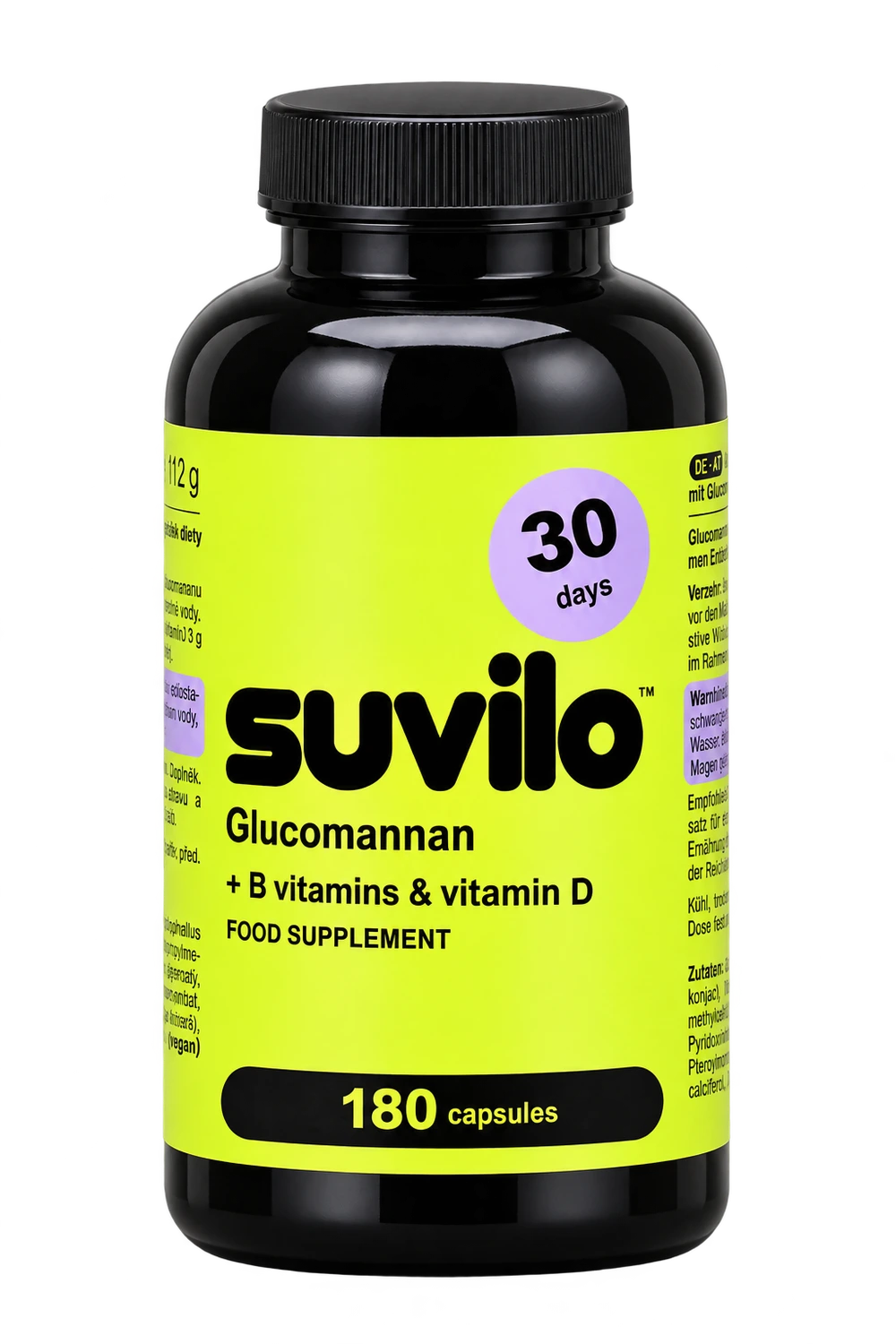
If you want to make suvilo capsules part of your routine, you can build on your usual mealtimes. The capsules contain glucomannan from konjac root, eight B vitamins and vitamin D3. See below for the amounts and directions for use.
You may already know konjac from the supermarket. Shirataki noodles are made from the konjac tuber. The same plant provides glucomannan, a soluble fibre that binds water. Glucomannan holds a lot of water and forms a thick mixture. That is why taking the capsules with plenty of water is essential. One serving of suvilo consists of two capsules and contains 1 g of glucomannan.
To make shirataki, the corm is processed into flour. Mixed with water, it can be used to make the familiar translucent noodles. To obtain glucomannan, the corm can be cut up, dried and milled. The soluble fibre is then separated from the flour and dried. In suvilo, the fibre from the same plant comes in capsule form. See the table below for amounts per capsule and per daily serving.

Vitamin B12 occurs naturally mainly in animal foods, such as fish, eggs and dairy products. Vitamin D is special: your body can make it with the help of sunlight. Here you can see which foods contain each vitamin and what its function is.
Vitamin B6 contributes to normal energy-yielding metabolism. You can find it in walnuts, red peppers and mackerel, for example.
Vitamin B12 contributes to normal red blood cell formation. It occurs naturally mainly in animal foods such as fish, eggs and dairy products.
Vitamin D contributes to the maintenance of normal muscle function. Oily fish such as herring and salmon provide vitamin D.
| Vitamin | Food examples | Function |
|---|---|---|
| Vitamin B1 (thiamine) | For example in oats, wholemeal bread and sunflower seeds. | Vitamin B1 contributes to normal energy-yielding metabolism. |
| Vitamin B2 (riboflavin) | In dairy products and fish, among other foods. | Vitamin B2 contributes to the reduction of tiredness and fatigue. |
| Vitamin B3 (niacin) | For example in peanuts. The body can also make niacin from the amino acid tryptophan. | Niacin contributes to normal functioning of the nervous system. |
| Vitamin B5 (pantothenic acid) | Found in many foods, such as eggs, mushrooms and wholegrain products. | Pantothenic acid contributes to normal mental performance. |
| Vitamin B6 | For example in walnuts, red peppers and mackerel. | Vitamin B6 contributes to normal protein and glycogen metabolism. |
| Vitamin B7 (biotin) | In oats, nuts and cooked eggs, among other foods. | Biotin contributes to normal macronutrient metabolism. |
| Vitamin B9 (folate) | Folate is the collective term for the forms of vitamin B9. Spinach and pulses provide naturally occurring folates. The form of vitamin B9 used in suvilo is folic acid. | Folate contributes to normal blood formation. |
| Vitamin B12 | Mainly in animal foods such as fish, eggs and dairy products. | Vitamin B12 contributes to normal red blood cell formation. |
| Vitamin D3 | Oily fish such as herring and salmon provide vitamin D. | Vitamin D contributes to the maintenance of normal muscle function. |
The daily values in the table are based on six capsules. For example, one capsule contains 0.105 mg of vitamin B6, while six capsules contain 0.63 mg. The percentage beside it shows how that daily amount compares with the nutrient reference value.
For vitamins, we have deliberately chosen daily amounts below the EU nutrient reference values: around 45–46% NRV. We assume you also get nutrients from your food and aim to eat a varied diet. And yes, a bag of crisps in the evening is part of real life sometimes too.
NRVs are reference values for labelling. A value above 100% NRV does not, by itself, mean an overdose that poses a health concern. What matters is the particular nutrient, total intake and how long you take it. High amounts of certain vitamins over the long term can pose health risks. The German Federal Institute for Risk Assessment (BfR), for example, highlights risks associated with high-dose vitamin D products.
| Ingredient | Per capsule | Per day | % NRV per day |
|---|---|---|---|
| Glucomannan | 500 mg | 3,000 mg | — |
| Vitamin B1 (thiamine) | 0.085 mg | 0.51 mg | 46% |
| Vitamin B2 (riboflavin) | 0.105 mg | 0.63 mg | 45% |
| Vitamin B3 (niacin) | 1.2 mg NE | 7.2 mg NE | 45% |
| Vitamin B5 (pantothenic acid) | 0.45 mg | 2.7 mg | 45% |
| Vitamin B6 | 0.105 mg | 0.63 mg | 45% |
| Vitamin B7 (biotin) | 3.75 µg | 22.5 µg | 45% |
| Vitamin B9 (folic acid) | 15 µg | 90 µg | 45% |
| Vitamin B12 | 0.19 µg | 1.14 µg | 46% |
| Vitamin D3 | 0.375 µg | 2.25 µg | 45% |
NRV = nutrient reference value for adults under Regulation (EU) No 1169/2011, rounded. No NRV has been set for glucomannan. NE = niacin equivalents. µg = micrograms. The table shows the ingredients with declared amounts. It is not a full list of ingredients.
BfR: Health assessment of high-dose vitamin D products · EFSA: Tolerable upper intake levels
Our recommended intake is two capsules before breakfast, lunch and dinner, each time with plenty of water. That makes six capsules a day. A pack contains 180 capsules and lasts 30 days at this intake.
There is a risk of choking if you have difficulty swallowing or take the capsules with too little fluid. Take them with plenty of water so the glucomannan reaches the stomach. Do not take them if you have difficulty swallowing. Do not exceed the recommended daily intake and keep the pack out of reach of young children. Food supplements are not a substitute for a varied, balanced diet and a healthy lifestyle.
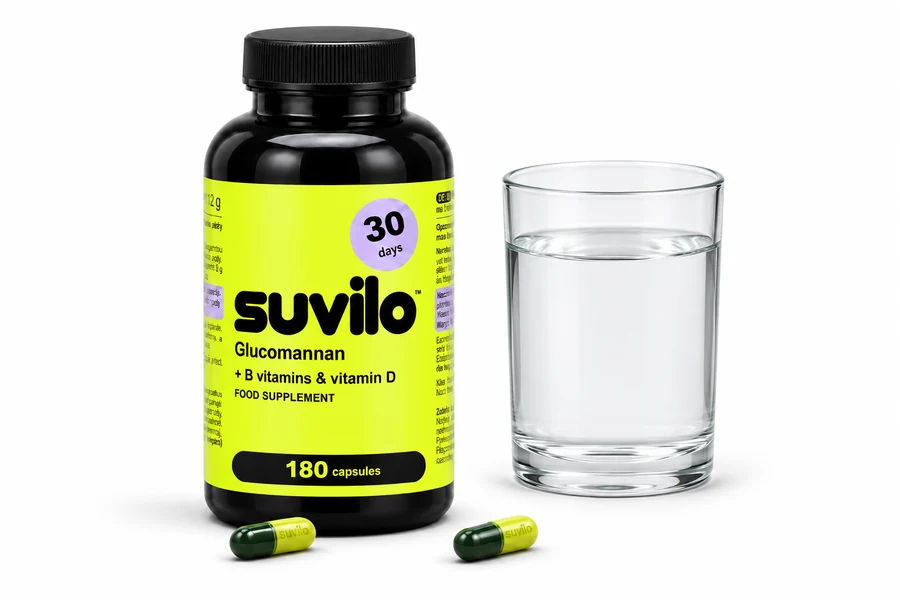
There is a risk of choking if you have difficulty swallowing or take it with too little fluid. Take the capsules with plenty of water so the glucomannan reaches the stomach. Do not take them if you have difficulty swallowing.
Do not exceed the recommended daily intake of six capsules.
Keep out of reach of young children. Food supplements are not a substitute for a varied, balanced diet and a healthy lifestyle.
Use the food diary to log meals and save frequent dishes as templates. In Move, find exercises for home, the office or the gym. Start shared challenges with friends and follow your progress in the garden.
If you take suvilo, you can also log your intake in the app and look back at your entries in your history.
One pack contains 180 capsules. At six capsules a day, it lasts 30 days.
One capsule contains 500 mg of glucomannan. Two capsules provide 1 g. Three portions a day provide 3 g in total.
Glucomannan absorbs water and expands. There is a risk of choking if you have difficulty swallowing or take it with too little fluid. Take each portion with plenty of water (1–2 glasses) so the glucomannan reaches the stomach. Do not take it if you have difficulty swallowing.
Yes. You can record your intake in the app and review your entries in your history. Follow the directions for use and instructions on the pack.